は or が
は (wa) marks what you're talking about, and が (ga) marks who does something: 私は学生です (watashi wa gakusei desu), I'm a student; 誰が来ましたか (dare ga kimashita ka), who came?
 Japanese course · 27 languages in one app
You don't have to master kanji before you can talk. Talvo starts with the phrases you'll use in your first week in Japan, shows them in kana and kanji with romaji alongside, and gets you saying them out loud.
First lesson free · iPhone and Mac, one subscription
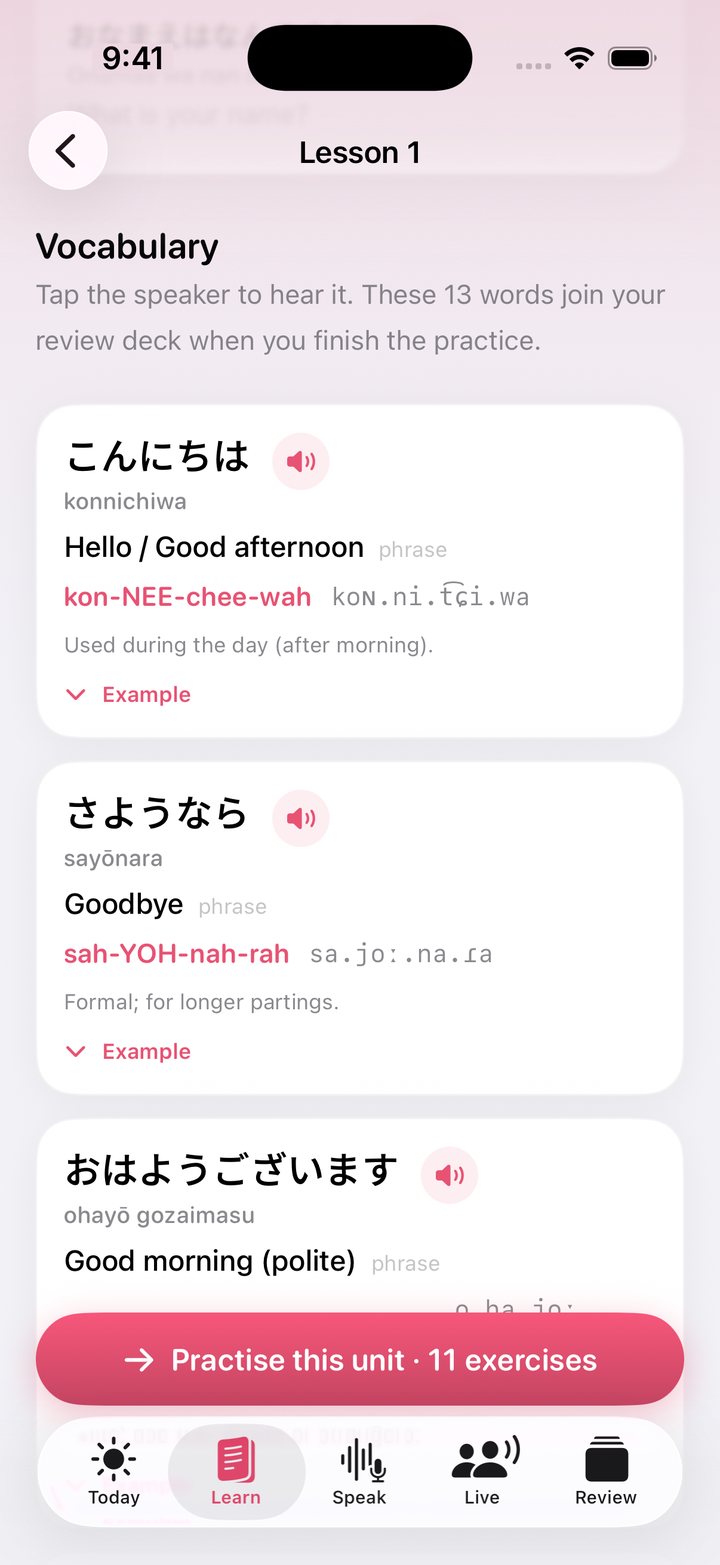
Twelve polite phrases that work with anyone, from a shop assistant to your host family.
| Japanese | Romaji | Meaning |
|---|---|---|
| こんにちは | konnichiwa | Hello / Good afternoon |
| おはようございます | ohayō gozaimasu | Good morning (polite) |
| はじめまして | hajimemashite | Nice to meet you |
| ありがとうございます | arigatō gozaimasu | Thank you (polite) |
| すみません | sumimasen | Excuse me / Sorry |
| これをください | kore o kudasai | This one, please |
| いくらですか? | ikura desu ka? | How much is it? |
| トイレはどこですか? | toire wa doko desu ka? | Where is the restroom? |
| 英語を話せますか? | eigo o hanasemasu ka? | Do you speak English? |
| わかりません | wakarimasen | I don't understand |
| もう一度お願いします | mō ichido onegaishimasu | Once more, please |
| いただきます | itadakimasu | Said before eating |
A line over a vowel (ō) means hold it twice as long. It changes meaning, so it's worth getting right from the start.
Ordering at a café in Tokyo. The tutor plays the staff member and uses the polite Japanese you'll actually hear.
は (wa) marks what you're talking about, and が (ga) marks who does something: 私は学生です (watashi wa gakusei desu), I'm a student; 誰が来ましたか (dare ga kimashita ka), who came?
Forms ending in -masu and desu, like たべます (tabemasu), are safe with anyone. Plain forms like たべる (taberu) are for friends. Talvo labels which phrases are polite.
おばさん (obasan) is aunt, おばあさん (obāsan) is grandmother. ビル (biru) is a building, ビール (bīru) is beer.
When an exercise asks you to write Japanese, romaji is accepted while you learn kana, and a missing long vowel gets a nudge instead of a fail.
No. Every phrase shows kana or kanji with romaji alongside, so you can start speaking on day one and pick up the script as you go.
Yes, to start. Your first lesson, three live-interpreter exchanges, your reviews and your deck are free. Talvo Pro unlocks unlimited lessons and conversations, and the yearly plan starts with a 7-day free trial.
Duolingo is built around short tap-and-match exercises and daily streaks. Talvo is built around speaking: lessons written around your interests, a tutor you talk to out loud, and a live interpreter for real conversations. Plenty of learners use both.
Yes. Talvo is a native app for iPhone and Mac, and one subscription covers both.
The first lesson is free. It takes about five minutes.


